

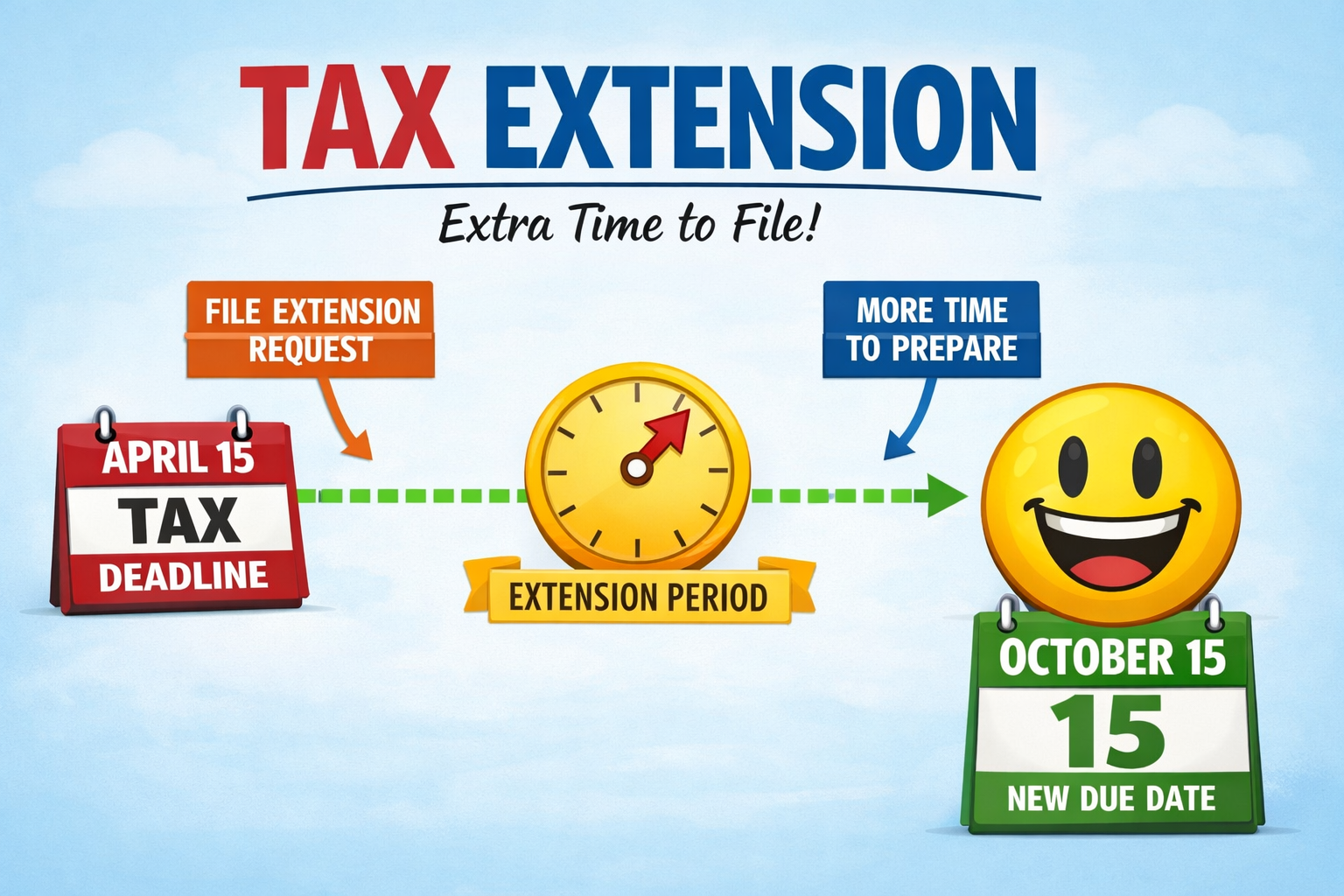
Ah, tax season. That annual cocktail of coffee, receipts, shoeboxes of statements, and that little voice in your head whispering, “Maybe I should have started this in February.” As a partner in a CPA firm, let me let you in on a little secret: extensions are your friend. Let’s talk about them in a friendly, truthful way—without jargon, without fear-mongering, and with some actual data on audits.
What Is a Tax Extension, Really?
When you file for an extension, you’re simply asking the IRS for more time to submit your tax return. For most individuals, this pushes the deadline from mid-April to October 15.
Important note: you still must pay any tax you owe by the April deadline to avoid penalties and interest, even if you get an extension.
In our world, extensions are like asking for a bit more time to cross your T’s and dot your I’s—nothing more magical than that.
Is Filing an Extension Going to Get You Audited?
Let’s address the big myth head-on: filing a tax extension does not increase your chances of an IRS audit. In fact, there’s no credible evidence that extensions make audits more likely. The IRS doesn’t release any data showing a link between filing on extension and being audited.
Here’s why:
The IRS selects returns for audit based on what’s on the return, not on when it was filed. It uses computerized scoring systems that compare your data to norms (things like income levels, deductions, credits, etc.).
Filing on extension simply pushes your filing date out; it doesn’t put a big red flag on your return for audit selection.
Some tax pros even theorize that extension filers might have a slightly lower chance of being audited because they’re more likely to take their time, gather all forms, and avoid errors that could trigger scrutiny. That’s an argument based on practice and logic, not official IRS data—but it’s a comforting one, nonetheless.
So, What Affects Audit Risk?
Since “extension vs. no extension” isn’t on the IRS radar, what actually matters?
Income level – Audit rates are extremely low overall (well under 1% for most taxpayers) but tend to rise with income. For example, individuals earning more have a statistically higher chance of being audited.
Complex tax situations – Multiple schedules, business income, unusual credits, or large deductions can make a return more likely to be selected.
Errors or mismatches – Things like unexplained deductions, missing income, or mismatches between what you report and what third parties report to the IRS are more likely to attract attention than your filing date.
So if there’s one thing to take away, it’s this: accuracy matters far more than timing.
When Extensions Really Shine
Extensions aren’t just about avoiding stress. They can be genuinely strategic :
They give you extra time to make sure you have every form and document before filing.
They reduce the need for rushed—and often error-prone—returns that might lead to amended returns later.
They help bring a little calm to what can otherwise be a hectic season.
And because audit selection is based on return content, filing a complete, accurate return—even if it’s in October—can be better from a risk standpoint than filing an incomplete return in April.
Bottom Line
If you’re considering an extension because you’re missing documents, juggling complex issues, or simply want to work with your CPA to get it right the first time, go for it. You’re not increasing your audit risk by doing so. The IRS bases audit selection on what’s on the return—not when you file it—and overall audit rates are quite low for most taxpayers anyway.
In the end, it is better to extend than exaggerate!


